 BEYOND LABELS
EXPLORE THE COLLECTION
Difficult questions
Honest introductions to complex subjects.
Dignity, justice and responsibilityMuhammad: life and character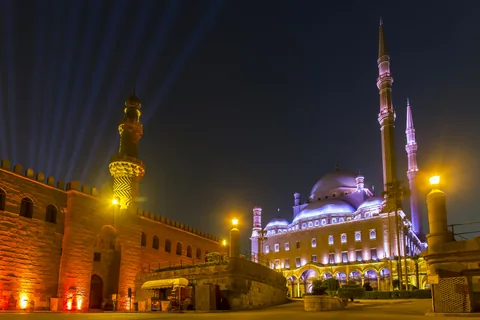
What is meant by Islamic law?
In discussions of Islamic law, sharia refers broadly to religious norms and guidance, while fiqh describes human juristic understanding of those norms.…
Read the articleIs leaving Islam a matter of religious freedom?
Classical Islamic jurists commonly prescribed severe punishments for apostasy, with differences in conditions and application. A 2021 Oxford Journal of…
Read the articleWhat does the Quran say about treatment of wives?
Quran 4:19 rejects taking women as inheritance against their will and addresses mistreatment related to marriage payments. It also calls for decent…
Read the articleWhat does Islamic law say about civilians in war?
The International Committee of the Red Cross studies restrictions in Islamic laws of war, including protection of people not participating in hostilities.…
Read the articleWhat does jihad mean?
Jihad is a religious term connected with striving. Islamic literature uses it for ethical self-discipline and also for armed struggle under particular…
Read the article
How can I evaluate a claim about a religion?
Begin with the exact claim and ask what kind of evidence would test it. A scriptural statement, an interpretation by a scholar, a law, a survey result and…
Read the articleWhat does Islam say about religious compulsion?
Quran 2:256 contains a statement against compulsion in religion. The historical and legal application of this verse, including debates about religious freedom and apostas…
Read the article
How is Jesus discussed in the Quran?
Jesus occupies an honored place in the Quran. The text describes him as the Messiah and a messenger of God, and recounts his extraordinary birth to Mary.
Read the articleWhat is Ramadan fasting?
Quran 2:183–185 introduces fasting and mentions exemptions for illness and travel. Muslims experience Ramadan in diverse ways, shaped by health, work, family and local tr…
Read the articleMary in Islamic scripture
Mary, known in Arabic as Maryam, is named in the Quran and is the namesake of its nineteenth chapter. The Quran portrays her as a woman of devotion and dignity.
Read the articleKindness across religious differences
Quran 60:8 discusses kindness and justice toward those who do not fight or expel believers. Its context and interpretations matter; it should not be treated as a complete…
Read the articleWhy do some Muslim women cover their heads?
Quran 24:31 is among the passages discussed in relation to modest dress. Interpretations, laws and individual choices vary. Some women describe covering as faith or ident…
Read the article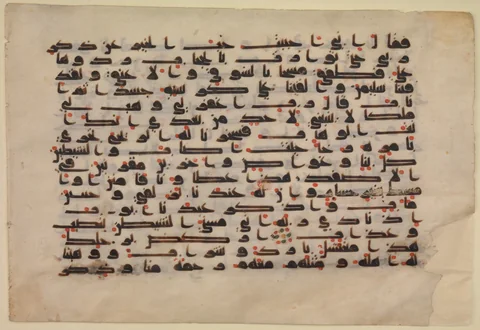
How should a quotation from scripture be read?
A quotation can lose meaning when detached from its surrounding text. A careful reading compares the original language, multiple translations, historical setting and inte…
Read the articleAbraham, Moses and Jesus in Islamic belief
Names familiar to Jewish and Christian readers also appear in the Quran. Abraham, Moses and Jesus are among the figures whom Muslims recognize as prophets.
Read the article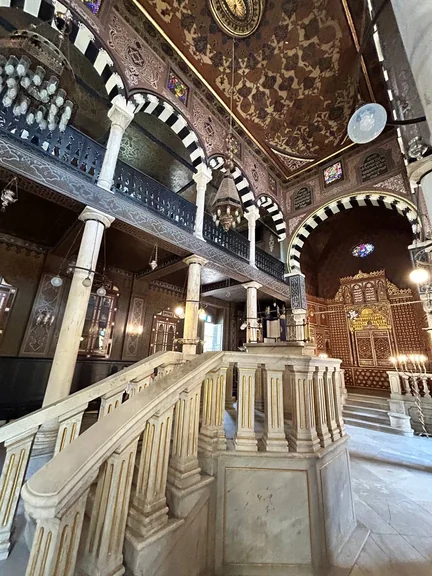
Churches, synagogues and mosques in the Quran
A passage in the Quran mentions several types of religious buildings together, rather than mentioning mosques alone. It appears in a discussion of expulsion and conflict.
Read the articleDisagreeing without insulting another faith
Religious disagreement does not have to turn into humiliation. Two Quranic passages are useful for understanding Islamic discussions of respectful speech across religious differences.
Read the articleDifferent beliefs, shared acts of service
People do not need identical theological beliefs in order to cooperate in ordinary acts of service. The Quran offers a passage often discussed in relation to religious difference and doing good.
Read the articleWho was Muhammad? A historical introduction
Muhammad ibn Abdullah lived in western Arabia around 570–632 CE. Muslims believe he was the final prophet of God. For a reader unfamiliar with Islam, his life helps explain the origins of its scripture, worship
Read the articleHuman dignity across religious difference
A narration preserved in Sahih al-Bukhari describes Muhammad standing when a funeral procession passed. When he was informed that the deceased was Jewish, he drew attention to the person’s humanity.
Read the articleService and humility at home
In a report attributed to Aisha, Muhammad is described as helping his household and leaving for prayer when its time arrived. The passage offers a glimpse of ordinary domestic life within the religious traditio
Read the articlePatience with someone in a position of service
Anas ibn Malik recalls a decade of service to Muhammad and describes an absence of harsh rebukes for what he did or failed to do. The recollection is recorded in Sahih al-Bukhari.
Read the articleAffection and compassion toward children
A report in Sahih al-Bukhari describes Muhammad kissing his grandson Hasan. Another man expressed surprise because he had not shown such affection to his own children. Muhammad responded by emphasizing mercy.
Read the articleGentleness as a moral principle
A report attributed to Aisha in Sahih Muslim describes gentleness as something that improves conduct, and its absence as something that diminishes it. It is part of a chapter on the virtue of gentleness.
Read the article