 BEYOND LABELS
Historical setting
Al-Jazari worked in the Artuqid court and documented a range of mechanical devices. His illustrated work brings engineering, craftsmanship and visual imagination together.
Documented contribution
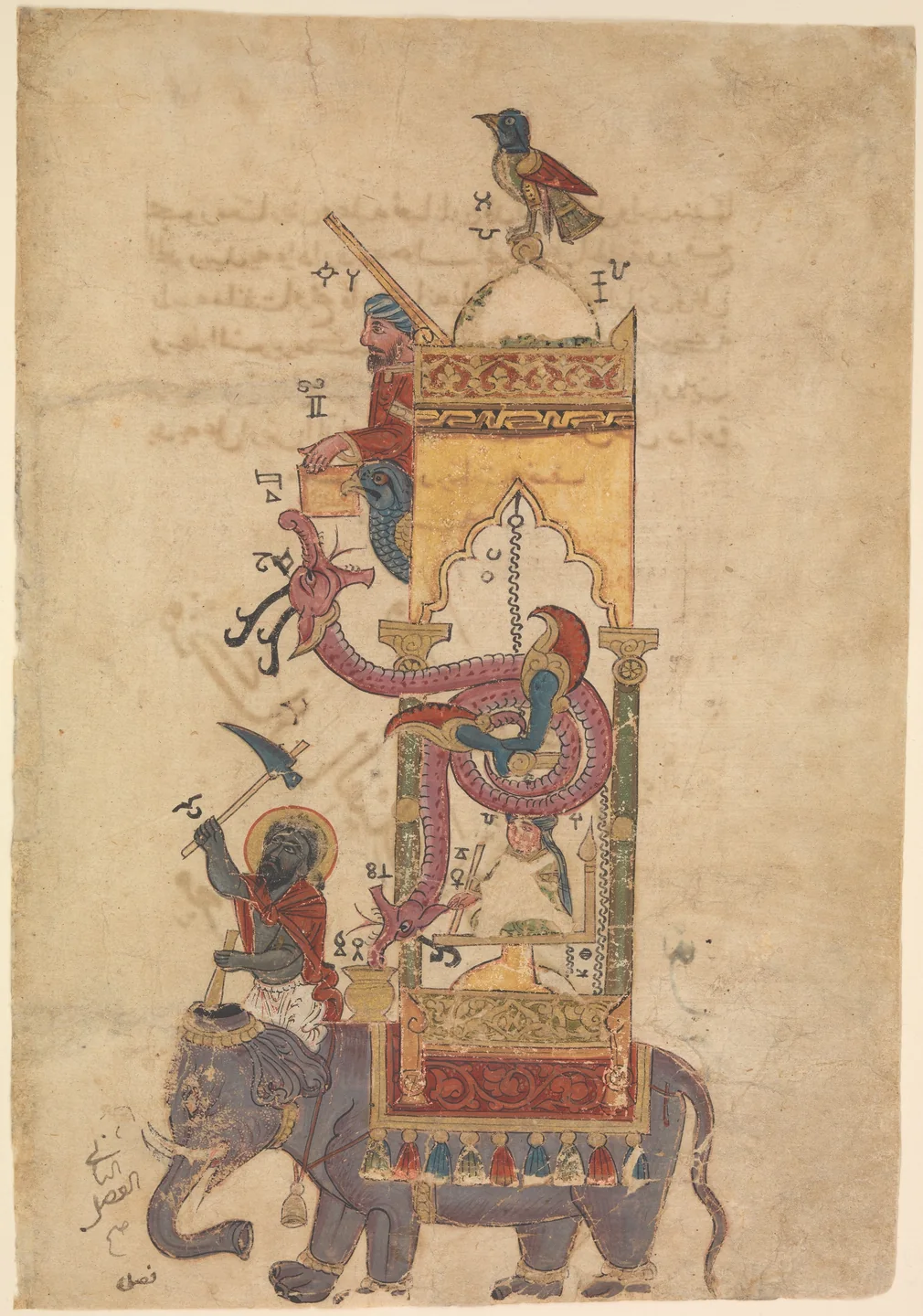
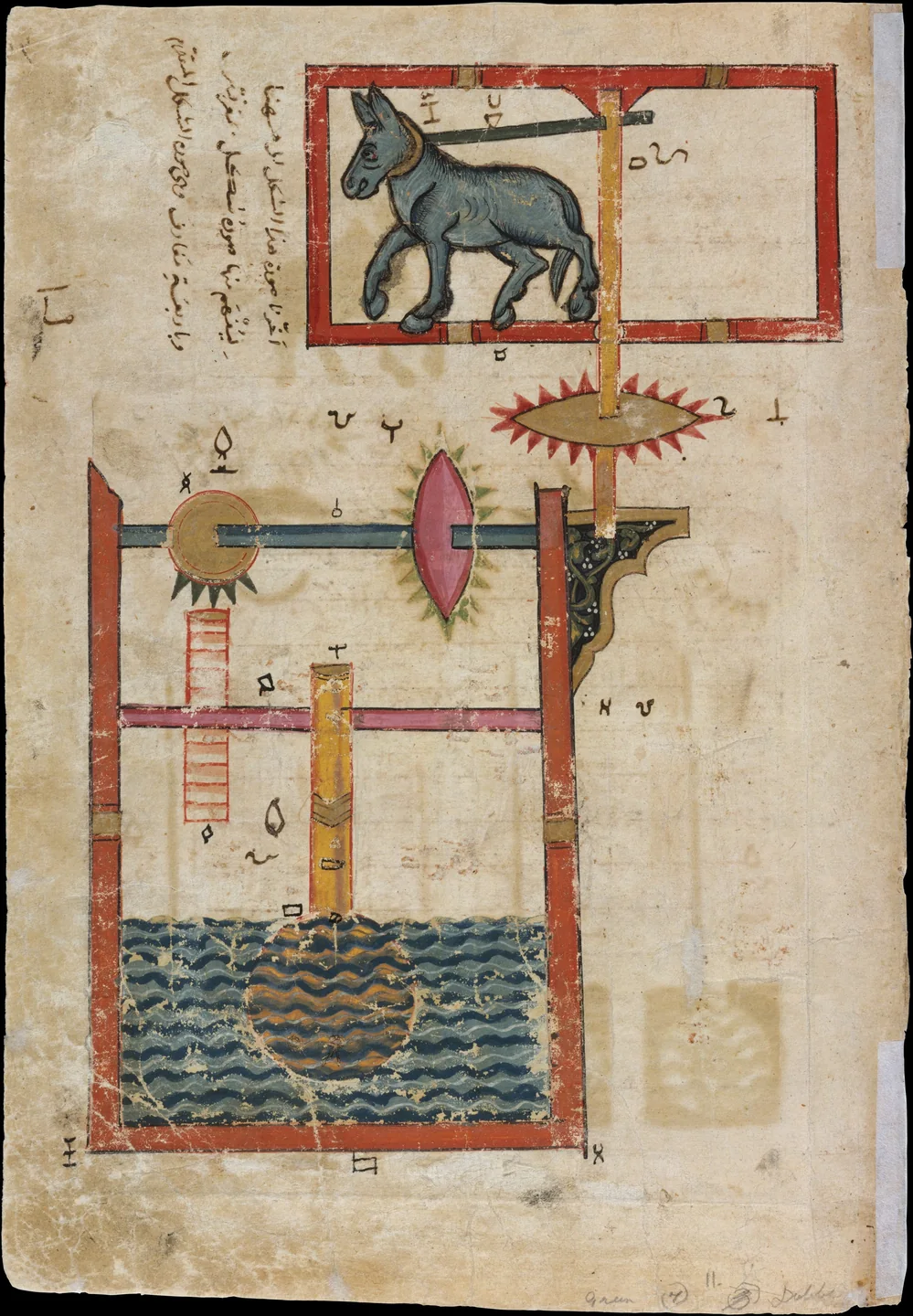
The Metropolitan Museum of Art preserves manuscript pages depicting an elephant clock, a waterwheel and other mechanisms. These objects offer a concrete way to study how medieval designers used moving parts and water to achieve mechanical effects.
Context and limits
These manuscripts demonstrate sophisticated mechanical design, not the invention of modern digital robots. Surviving illustrations may be later copies; their dates are not necessarily the dates of the original designs.
Sources and references
- Museum or archiveThe Met — Elephant Clock
- Museum or archiveThe Met — Waterwheel design
Editorial draft; independent specialist review remains pending.