 BEYOND LABELS
READING GUIDE · 6
Reading claims with care
A toolkit for distinguishing quotations, surveys, interpretations and generalizations.
Educational preview: all linked articles await independent review. Guides are not certifications or definitive interpretations.
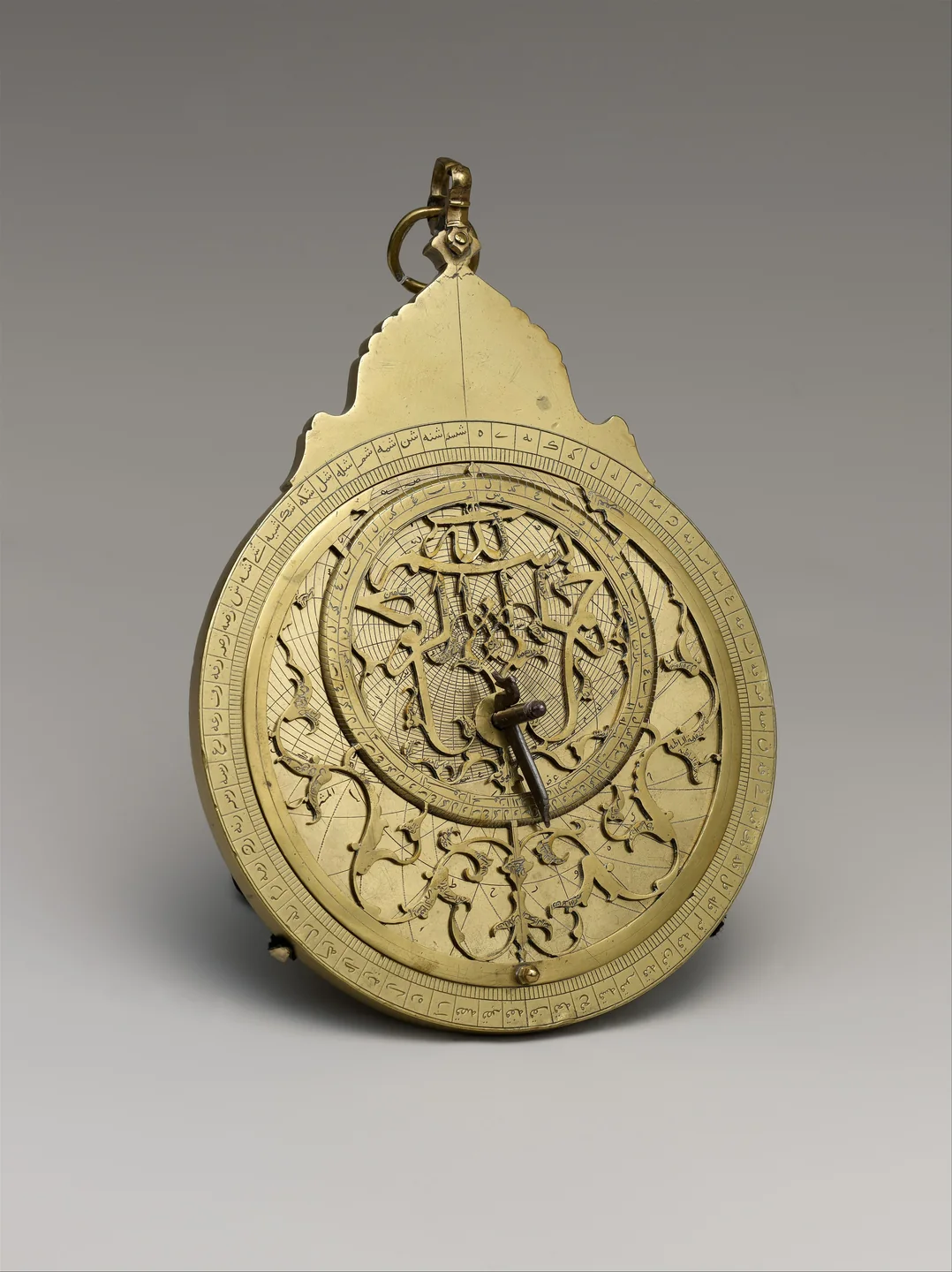
Section photograph · Brass and steel astrolabe made in Mashhad, Iran, dated 1654–55, by Muhammad Zaman al-Munajjim al-Asturlabi. Photo credit and license
How can I evaluate a claim about a religion?
Begin with the exact claim and ask what kind of evidence would test it. A scriptural statement, an interpretation by a scholar, a law, a survey result and a report about an individual are different kinds of evidence. Harvard’s Religion and Public Life program emphasizes diversity within religious traditions, historical change and cultural context.
While reading: What is the exact claim being tested?
How should a quotation from scripture be read?
A quotation can lose meaning when detached from its surrounding text. A careful reading compares the original language, multiple translations, historical setting and interpretations. Harvard’s religious literacy approach emphasizes that religious traditions have internal diversity and change over time.
While reading: Read the surrounding text and compare translations.
Does one Muslim speak for every Muslim?
No individual can represent the beliefs and behavior of an entire religious population. Evidence about a person, group or government should be assessed at that level. Religious texts, legal interpretations, cultures and personal choices are distinct types of evidence. This does not prevent criticism of specific actions or ideas.
While reading: Is the evidence about one person or a larger population?
Claim: Most Muslims live in the Middle East and North Africa
Pew Research Center estimates for 2020 place the largest Muslim populations in Indonesia, Pakistan, India and Bangladesh. Its 2025 analysis also estimates that only around one fifth of the world’s Muslims live in the Middle East and North Africa.
While reading: Check the date, geography and definition in the source.
Do all Muslims support attacks on civilians?
A 2017 Pew survey asked American adults whether targeting and killing civilians for a political, social or religious cause could be justified. Most Muslim respondents rejected it. This is evidence against the claim of universal support, not a measurement of every Muslim worldwide.
While reading: Which population was surveyed, when, and with what wording?
Claim: Islam has only one interpretation
Religious traditions are internally diverse and develop over time. Harvard’s religious literacy course examines this principle across several religions, including the diversity of interpretations of Islamic scripture. Shared texts and beliefs do not mean agreement on every legal or ethical question.
While reading: What distinctions between interpretations are relevant?