 BEYOND LABELS
READING GUIDE · 6
Compassion, dignity and service
Read ethical teachings beside documented examples of service, without treating individual stories as proof about an entire population.
Educational preview: all linked articles await independent review. Guides are not certifications or definitive interpretations.
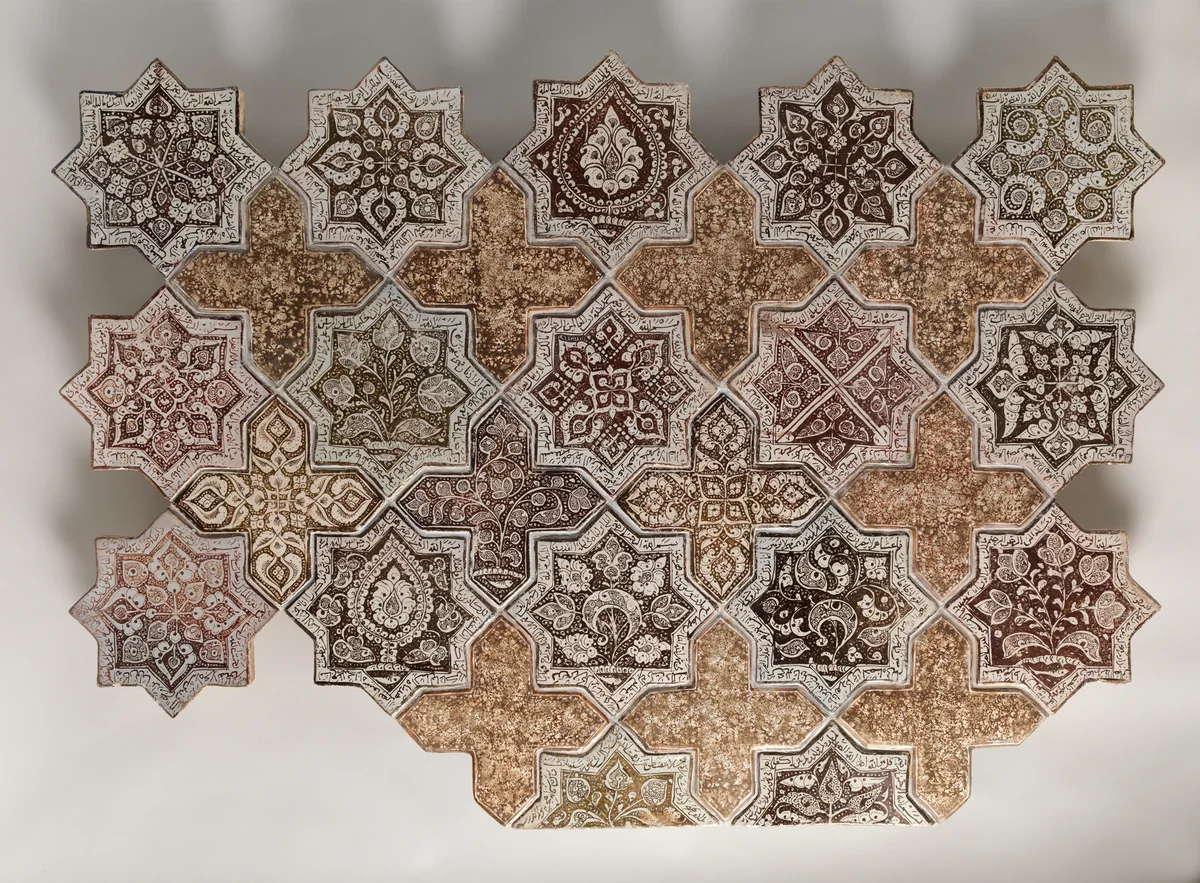
Section photograph · Iranian panel of star- and cross-shaped tiles, in part from 1260–70. The plain crosses were made in the twentieth century to replace missing tiles. Photo credit and license
Mercy as an ethical value
Quran 21:107 describes the prophetic mission in terms of mercy. Muslim interpretations discuss how this value relates to personal conduct and social responsibility. This is a textual ideal, not a description of all Muslims.
While reading: Which source supports the ethical principle?
Compassion for animals
A narration in Sahih al-Bukhari describes a traveler who noticed a dog suffering from thirst. He returned to a well and brought the animal water. In the narration, the act is treated as morally significant, and the Prophet explains that kindness toward living creatures can be rewarded.
While reading: What is the scope of the account?
Care for children who have lost parents
Quran 90:12–16 presents demanding acts of care, including providing food during hunger to an orphaned relative or a person in need. A narration in Sahih al-Bukhari 6005 also associates caring for an orphan with closeness to the Prophet in Paradise. Together, these texts show the ethical importance attached to care for vulnerable children.
While reading: How does the source describe care and responsibility?
A neighbor should feel safe
Sahih al-Bukhari 6016 connects a person’s faith with whether neighbors are protected from that person’s harmful conduct. The narration presents the safety of others as a serious ethical concern, rather than reducing religious life to private rituals.
While reading: What responsibility toward neighbors does the text describe?
When a Houston mosque became a shelter
During Hurricane Harvey in August 2017, Al-Salam Mosque in northwest Houston opened its doors to people displaced by flooding. NPR reporters described residents taking refuge in its gymnasium, volunteers preparing meals and community members bringing supplies. People from different religious backgrounds participated in the relief effort.
While reading: Who reported the shelter story, and what did they document?
Abdul Sattar Edhi: building a life of service
Abdul Sattar Edhi began with a small dispensary in Karachi and developed a charitable organization alongside his family and colleagues. The Edhi Foundation’s account describes its origins; independent obituaries published in 2016 describe its ambulance and social-care work.
While reading: Separate the documented work from assumptions about motivation.